
Review the official change
We start with legislation and official government/regulator guidance, then identify what changes in the landlord’s actual workflow.
How we keep up with legislation
Landlord Buddy is not built around one frozen checklist. When landlord rules change in England, we review the official position, work out what changes in practice, update affected workflows where appropriate and build training and learning material around it.
We separate what government has actually confirmed from what is still coming, so the product can evolve without pretending future technical detail already exists.
What happens when something changes
We start with legislation and official government/regulator guidance, then identify what changes in the landlord’s actual workflow.
If a date, document, sequence, evidence requirement or process in Landlord Buddy needs changing, we assess and update the affected workflow.
Material changes become training topics, with a guest specialist where that adds useful practical expertise.
Customers receive recordings and PDF guides so the explanation does not disappear when the live webinar ends.
Coming next
The government’s implementation roadmap says the PRS Database is due to begin a regional rollout from late 2026. The detailed operating and technical route still matters before anyone can responsibly promise automation.
Once the final requirements and any usable technical access are confirmed, we will assess where Landlord Buddy can safely reuse the property and compliance information already held in the platform, automate steps where possible, and build the training and learning material landlords need.
Read the official implementation roadmap →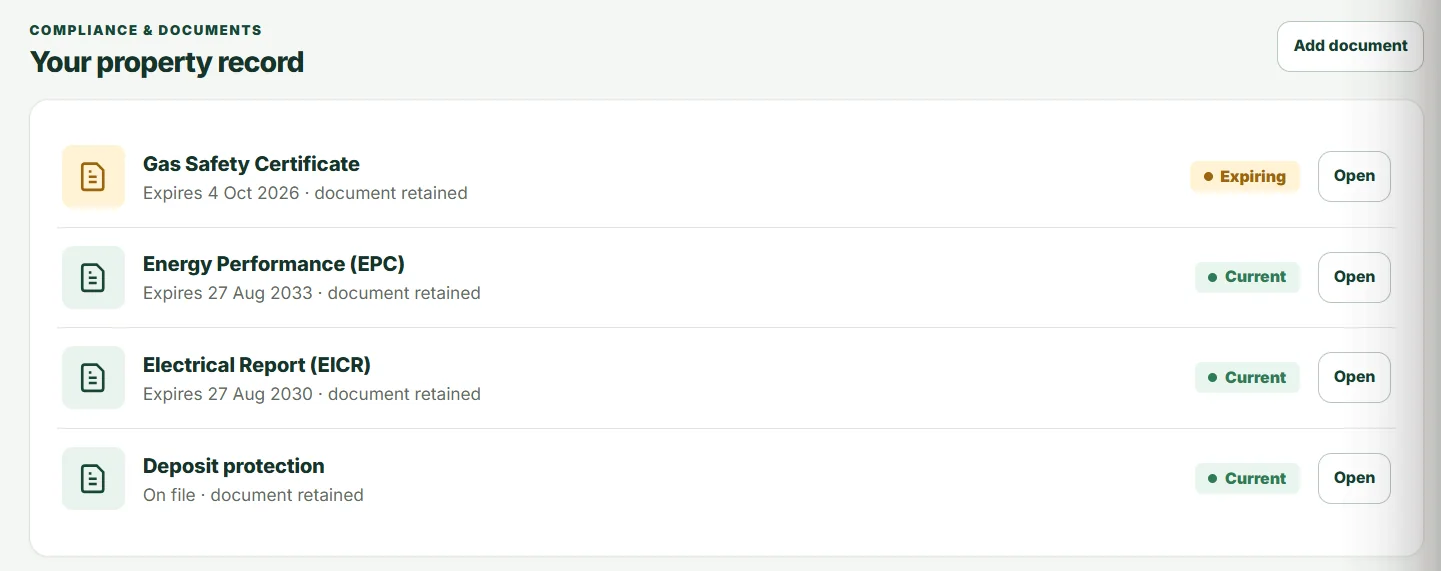
No invented certainty
The sensible promise is that Landlord Buddy will monitor material changes, assess them properly and evolve where the product can genuinely help. Sometimes that will mean software changes. Sometimes it will mean training or updated guidance. Sometimes the right answer will still be professional advice.
Landlord Buddy is currently built for private residential landlords in England. Scotland, Wales and Northern Ireland operate different tenancy and housing-law regimes.