
01
Holding deposit
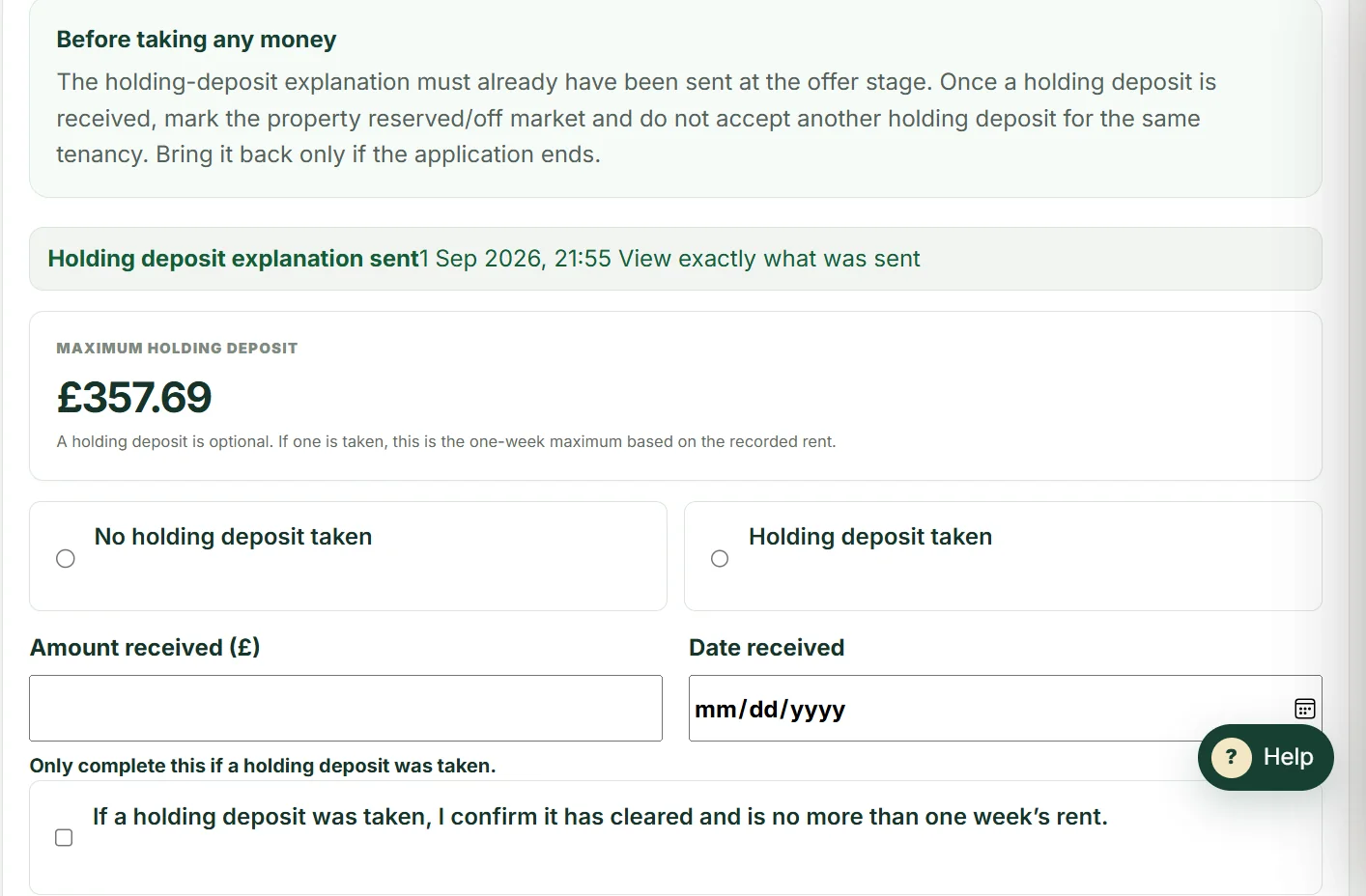
The journey shows the one-week maximum, records whether a deposit was taken and stores the amount and date.
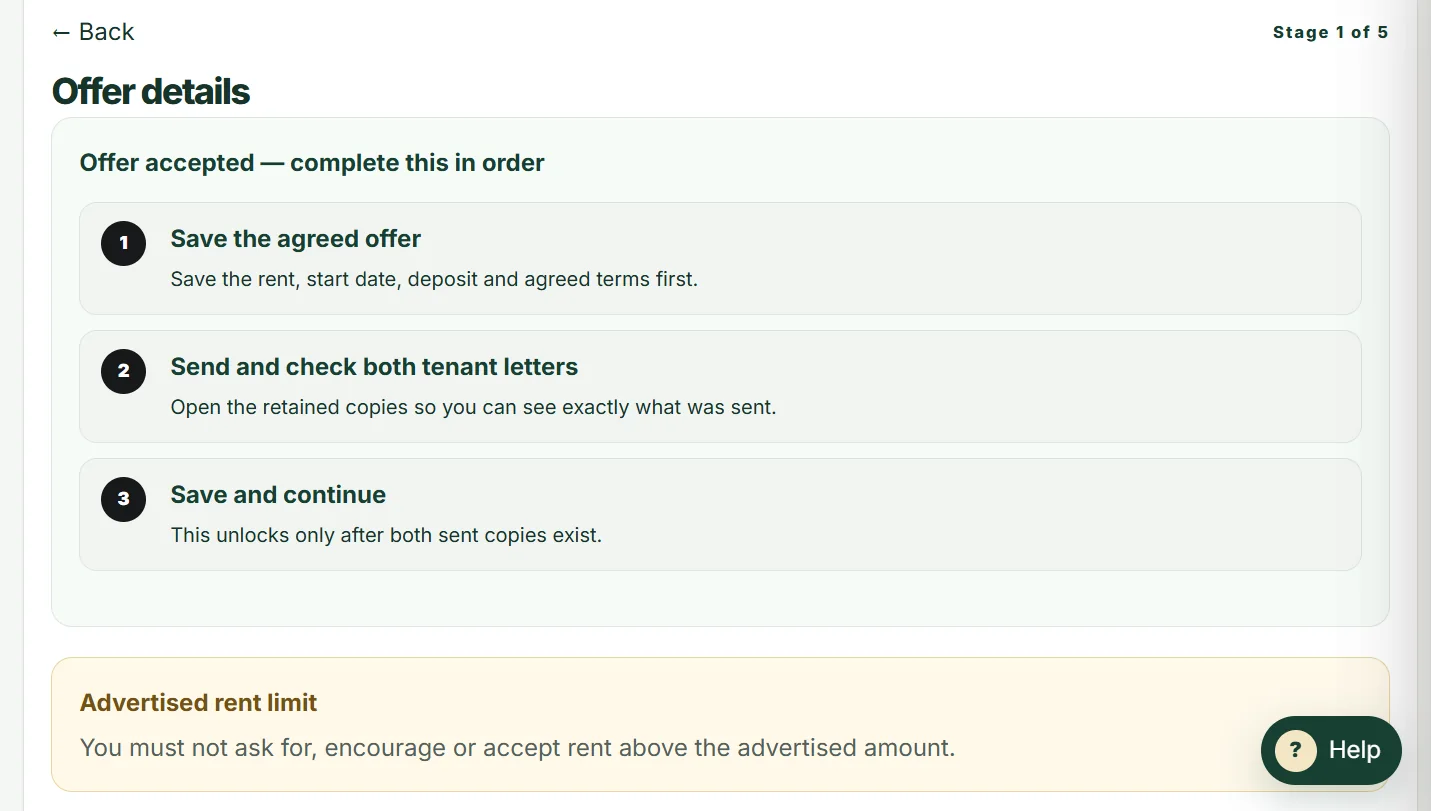
From accepted offer to move-in
A £50 guided journey covering the practical steps from offer acceptance through holding deposit, checks, documents, agreement, signing, deposit and move-in evidence.
What this lets you do
Landlord Buddy is designed around the practical workflow rather than making the landlord maintain another disconnected checklist.
Inside the workflow
Open any screen for a larger view. The live app keeps the detailed workflow, documents and evidence together.
The journey shows the one-week maximum, records whether a deposit was taken and stores the amount and date.
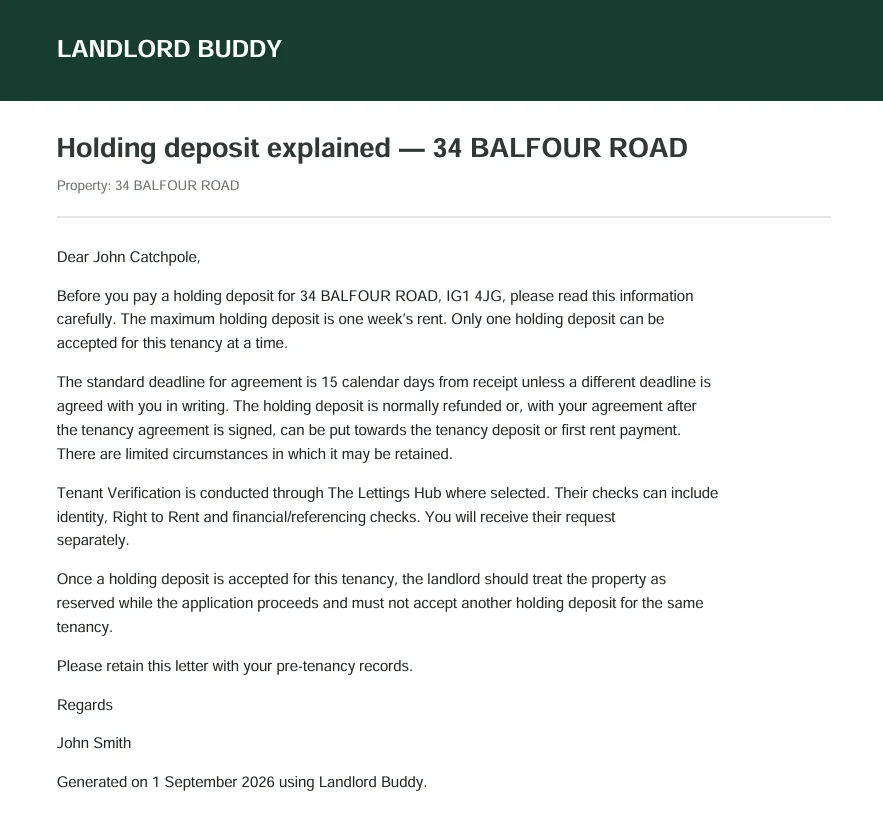
The holding-deposit explanation is generated for the tenant and a retained copy shows exactly what was sent.
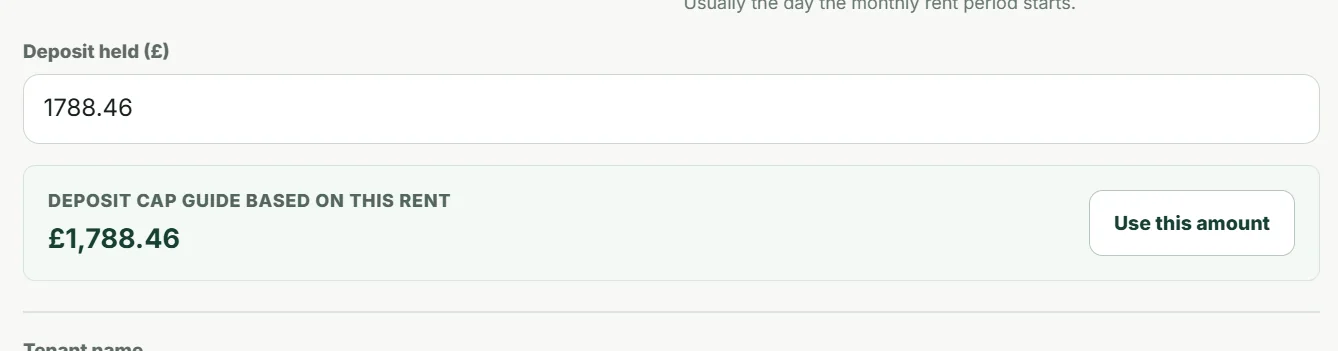
The recorded rent is used to show the maximum tenancy deposit before the amount is carried into the setup.
What stays on the record
The exact record depends on the route taken, but this area is designed to leave the relevant dates, decisions and documents attached to the tenancy.
Relevant rules & official sources
The summaries below explain why the workflow exists. Landlord Buddy helps organise the process and evidence; the official source remains the authority.
For new assured tenancies created from 1 May 2026, landlords must give specified written information about the tenancy before the agreement is signed or otherwise agreed. GOV.UK warns that failure can lead to a financial penalty of up to £7,000.
How Landlord Buddy helps: The guided setup keeps the tenancy terms, agreement and delivery events in one chronology instead of relying on memory or a loose email chain.
GOV.UK: written information landlords must give tenants ↗Landlords and agents cannot ask for, encourage or accept an offer above the advertised rent. The written advert must state a specific rent.
How Landlord Buddy helps: The offer stage keeps the advertised-rent limit visible while the landlord records the agreed offer, helping prevent the workflow drifting into rental bidding.
GOV.UK: rental bidding rules ↗A holding deposit is capped at one week’s rent. A tenancy deposit is normally capped at five weeks’ rent where annual rent is below £50,000, or six weeks where annual rent is between £50,000 and £100,000.
How Landlord Buddy helps: Landlord Buddy calculates the relevant deposit figures from the recorded rent and keeps the amount, date and tenant communication against the application.
GOV.UK: fees, holding deposits and tenancy deposits ↗From 1 May 2026 landlords cannot ask for, encourage or accept rent before the tenancy agreement is signed. After signing and before the start date, the usual maximum for a monthly tenancy is one month’s rent.
How Landlord Buddy helps: The pre-tenancy workflow keeps holding deposit, tenancy deposit and move-in rent as separate steps so the money position is easier to understand and evidence.
GOV.UK: rent and other payments ↗Large HMOs require a licence and councils can also operate additional or selective licensing schemes for other privately rented homes.
How Landlord Buddy helps: The pre-tenancy journey asks about household structure and licensing context at the start, when a problem is still fixable rather than after the tenant has moved in.
GOV.UK: HMO licensing ↗England only · practical product guidance, not legal advice. Read the full Renters’ Rights guide →