
01
The chronology behind the figures
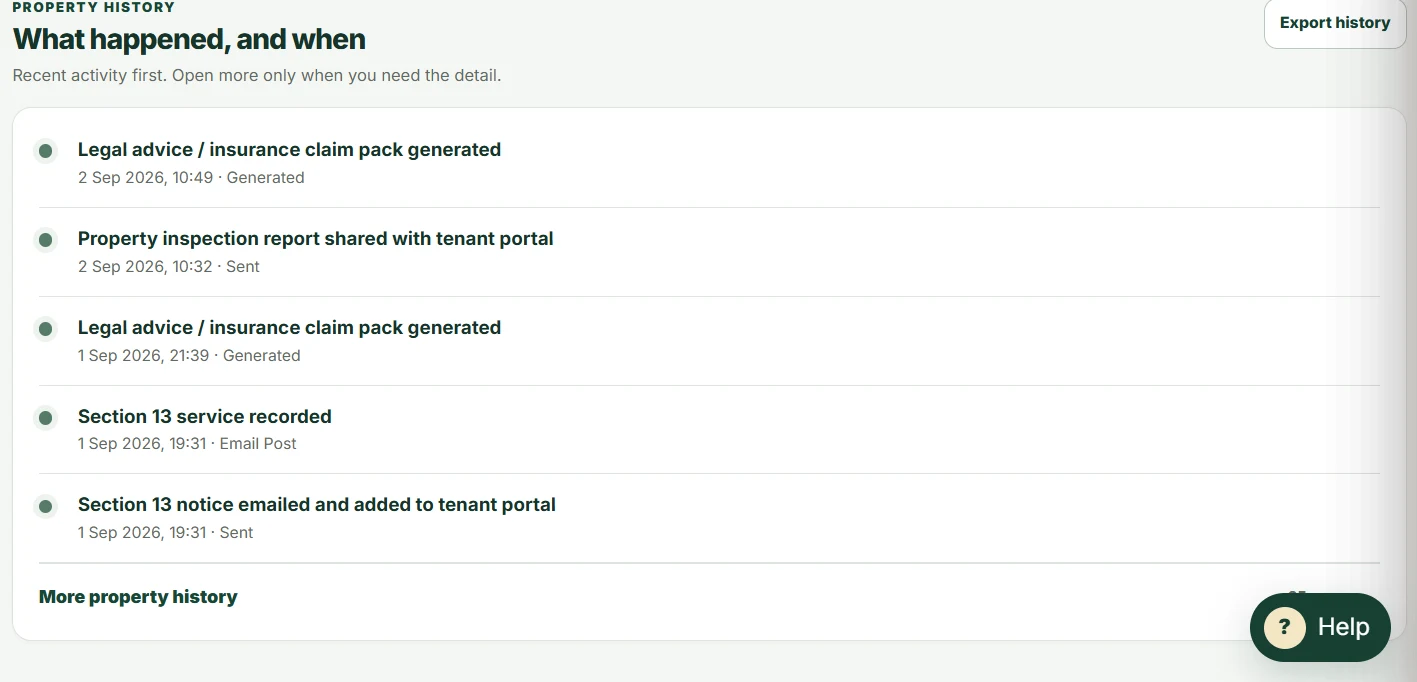
The property history records tenancy actions and correspondence around the rent position as they happen.
Money and chronology
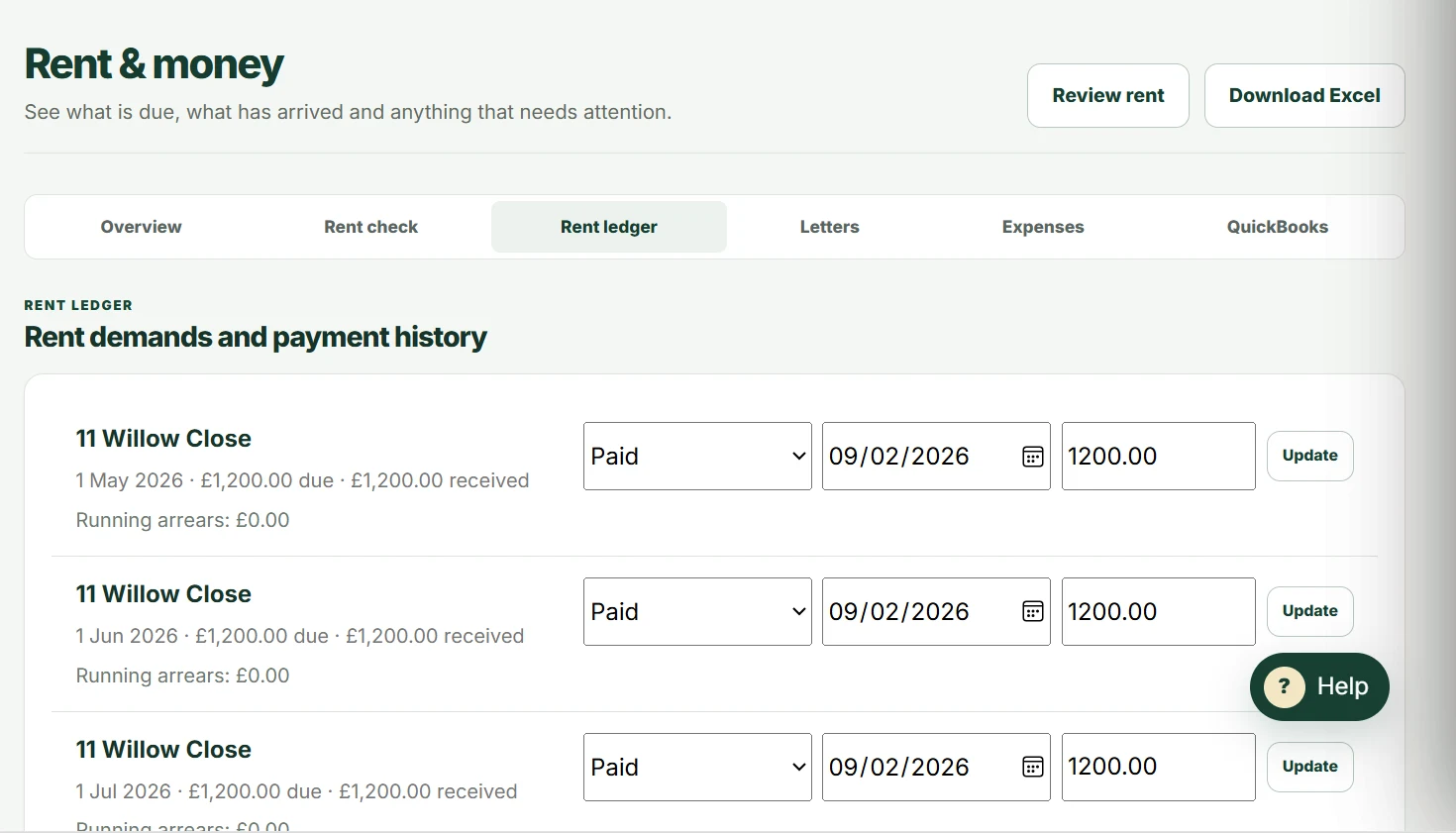
A running rent schedule shows what should have been paid, what was actually received and when arrears began, with correspondence and evidence available from the same tenancy.
What this lets you do
Landlord Buddy is designed around the practical workflow rather than making the landlord maintain another disconnected checklist.
Inside the workflow
Open any screen for a larger view. The live app keeps the detailed workflow, documents and evidence together.
The property history records tenancy actions and correspondence around the rent position as they happen.
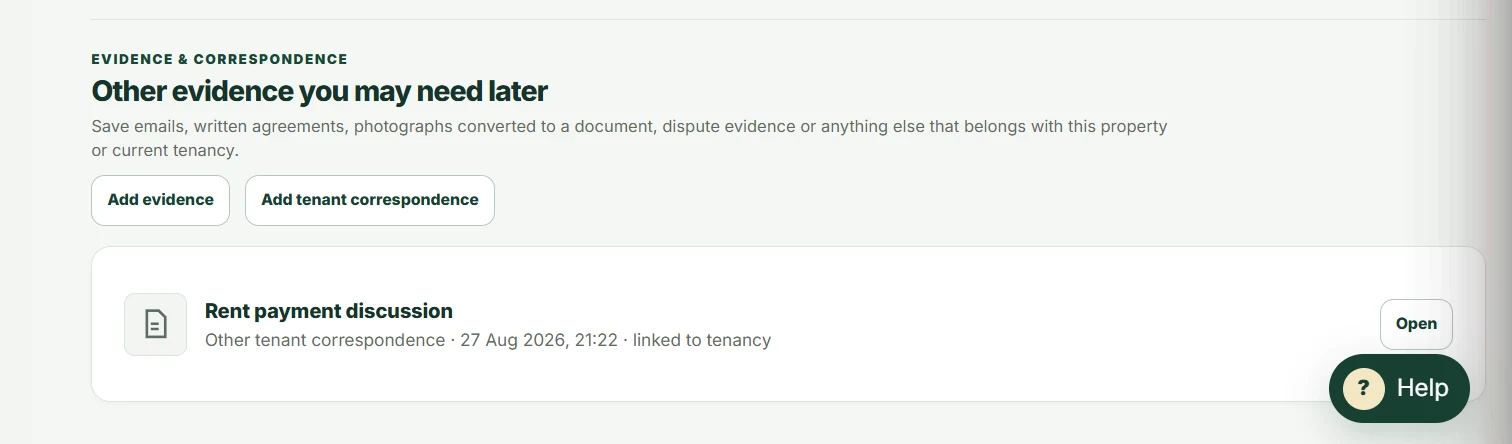
Save relevant emails, written agreements or message screenshots against the property instead of leaving them on a phone or in an inbox.
What stays on the record
The exact record depends on the route taken, but this area is designed to leave the relevant dates, decisions and documents attached to the tenancy.
Relevant rules & official sources
The summaries below explain why the workflow exists. Landlord Buddy helps organise the process and evidence; the official source remains the authority.
For monthly rent, Ground 8 requires at least three months’ arrears both when notice is served and at the possession hearing. The current notice period is four weeks.
How Landlord Buddy helps: A dated rent ledger makes the threshold and chronology visible instead of asking the landlord or solicitor to reconstruct it from bank statements later.
GOV.UK: grounds for possession ↗Ground 10 covers any rent arrears and Ground 11 persistent late payment. The court decides whether possession is reasonable.
How Landlord Buddy helps: The value is not an automatic eviction button; it is a cleaner record of what was due, what arrived, when letters were sent and how the pattern developed.
GOV.UK: grounds for possession ↗Current possession guidance warns that a court may be unable to make a possession order if the tenancy deposit has not been protected as required, subject to statutory exceptions.
How Landlord Buddy helps: The evidence pack brings the deposit record into the same file as the rent ledger and correspondence so a support handover starts with a fuller picture.
GOV.UK: grounds for possession ↗England only · practical product guidance, not legal advice. Read the full Renters’ Rights guide →